What to Do in Avignon: A Guide from the Quiet Side
From Les Angles, you face Avignon across the Rhône: the City of the Popes five minutes away, without the crowds or the headache of parking inside the walls. That's the advantage of staying on the opposite bank — you enjoy the great monuments by day and return to the calm of the hills in the evening.
The best of both banks, between spectacular heritage and quiet villages. Here's our guide.
The City of the Popes
In the 14th century, as the papacy left Rome, Avignon became for nearly a hundred years the capital of Christendom. Nine popes succeeded one another here, leaving behind a spectacular, UNESCO-listed heritage.
The Popes' Palace
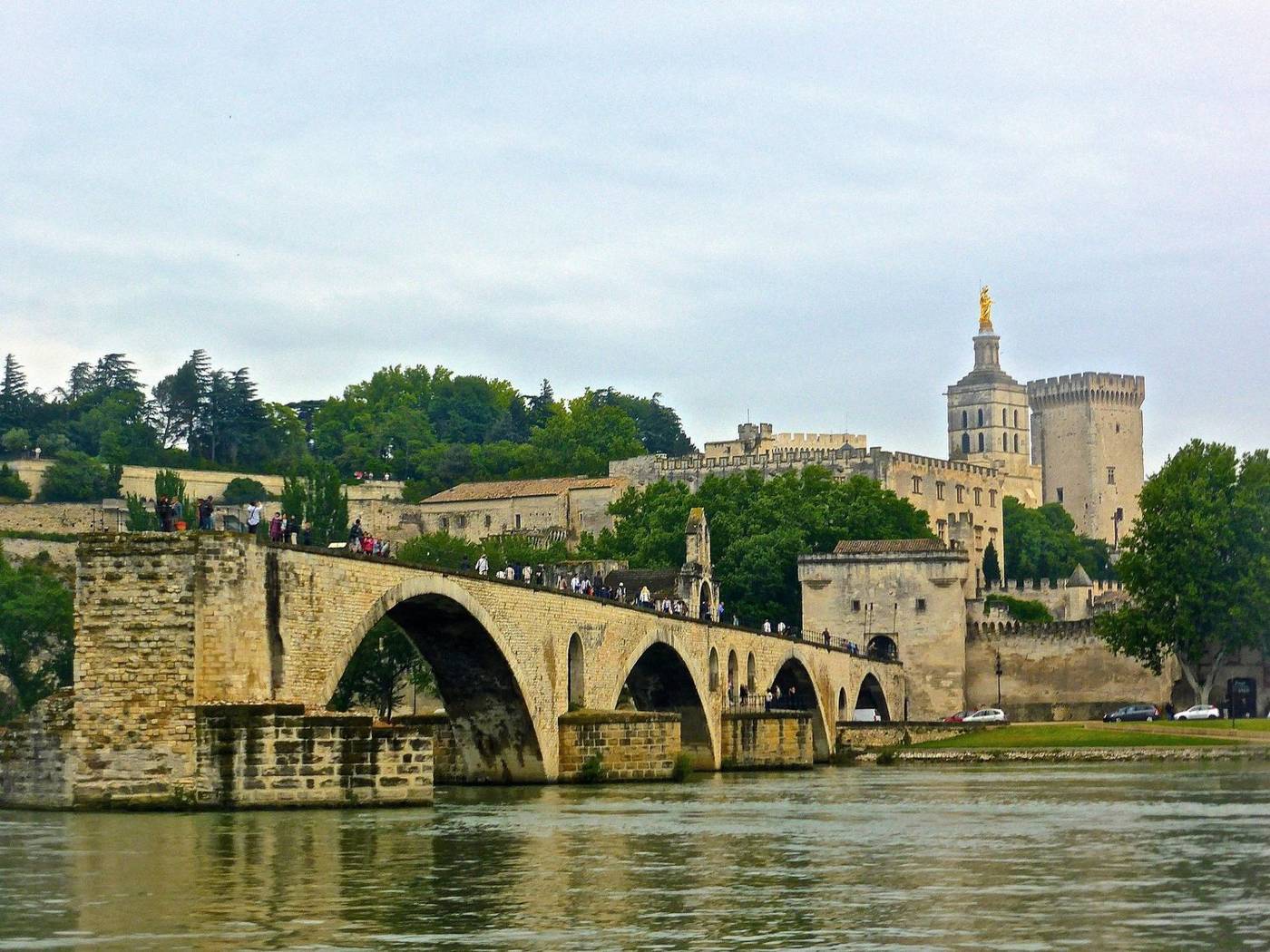
The largest Gothic palace in Europe — fortress as much as residence — it impresses with its immense halls and towers. You tour it with an augmented-reality tablet (the "Histopad") that restores the lost décor and furnishings room by room — a lively visit, great with children. Allow 1½ to 2 hours.
The bridge & the Rocher des Doms
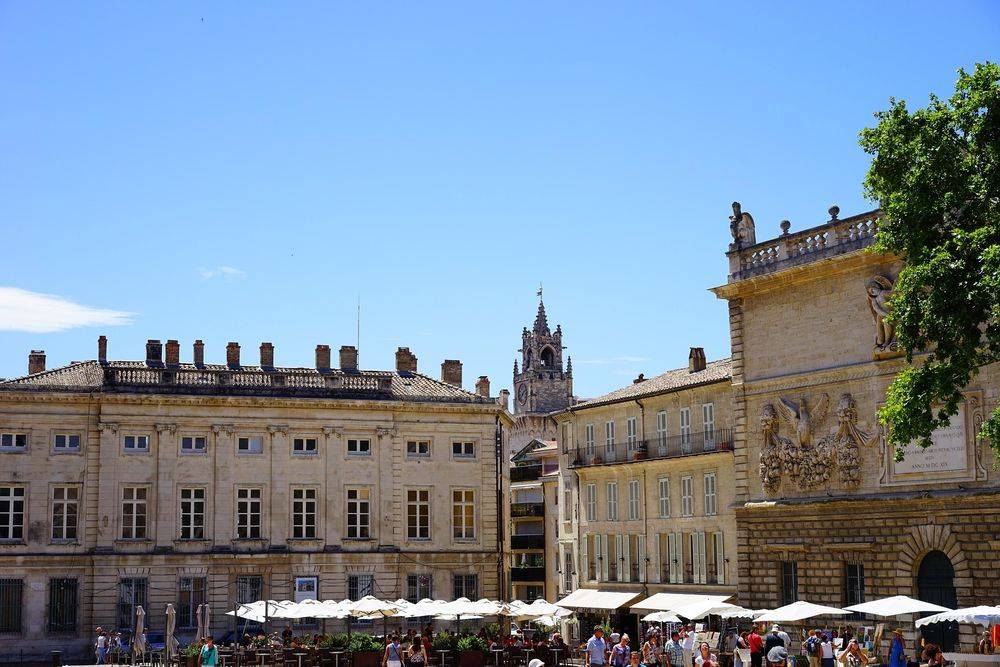
The famous Pont Saint-Bénézet — the "Pont d'Avignon" of the nursery song — reaches out over the Rhône before stopping abruptly: floods carried away its arches over the centuries. Legend says a young shepherd, Bénézet, had it built on divine command. Just above, the Rocher des Doms garden offers the finest view over the river, the bridge and the valley — perfect at sunset. Coming down, the Place de l'Horloge and the Petit Palais (medieval painting) round off the visit.
The Villeneuve & Les Angles side
The opposite bank is more secret — and it's where you're staying. Villeneuve-lès-Avignon, founded by the kings of France to keep watch on the papal city, lines up a surprising and far less crowded heritage:
- the Chartreuse du Val de Bénédiction, one of the largest Carthusian monasteries in France, with its cloisters and its silence.
- the Fort Saint-André and the gardens of Saint-André Abbey, perched on the hill — among the most beautiful gardens in France, with a sweeping view of Avignon.
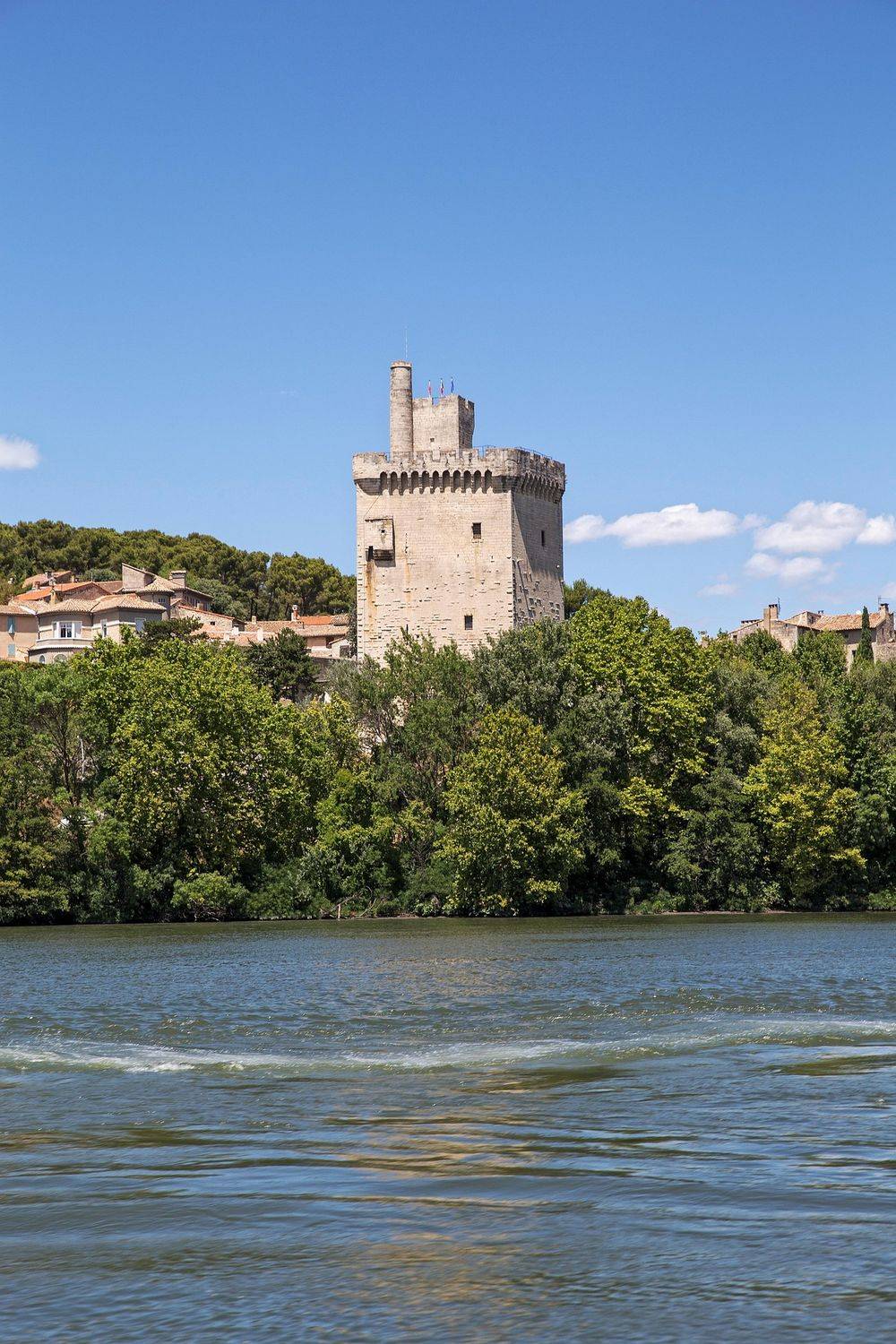
- the Tour Philippe le Bel, from which you take in the Rhône, the bridge and the Popes' Palace opposite in a single glance.
The Les Angles hills, quieter still, make the ideal base: you enjoy Avignon without enduring its crowds, and the Tavel and Lirac vineyards are a stone's throw away (see our Food & Terroir guide).
The Festival & when to come
In July, the Avignon Festival — the prestigious "in" in the Palace's Court of Honour, and the sprawling "off" across the whole city — turns Avignon into an open-air stage. It's magical, electric, unique in Europe — and it's the busiest time by far: book very early, both lodging and shows.
A day in Avignon from Les Angles
Morning: cross on foot via the Daladier bridge (or five minutes by car) for the Popes' Palace at opening, then the Saint-Bénézet bridge and the climb to the Rocher des Doms. Midday: lunch on Place des Corps-Saints or down a lane inside the walls. Afternoon: back to the Villeneuve side, cooler and calmer — the gardens of Saint-André Abbey and the Tour Philippe le Bel for the panorama, before aperitivo on the gîte terrace. The next day, a wine escape to Châteauneuf-du-Pape (20 min) or Roman heritage at the Pont du Gard and Nîmes.
Getting there
From Les Angles, you reach central Avignon on foot across the Daladier bridge (via the Barthelasse island), or in a few minutes by car. The Avignon TGV station (Paris in 2 hrs 40) is a quarter of an hour away. It's one of the gîte's big advantages: no parking to manage inside the walls.
FAQ
Can I walk to Avignon from Les Angles?
Yes, via the Daladier bridge and the Barthelasse island — one of the gîte's big pluses: you avoid parking in the city.
How long for the Popes' Palace?
Allow 1½ to 2 hours with the augmented-reality visit.
Do I need to book during the Festival?
Absolutely, several months ahead for both lodging and shows. In July everything fills up very early.
What can I see in Avignon in one day?
The Popes' Palace, Saint-Bénézet bridge and Rocher des Doms in the morning; Villeneuve-lès-Avignon (Saint-André gardens, Tour Philippe le Bel) in the afternoon.
Is Avignon good with children?
The Palace with the Histopad captivates them, the Rocher des Doms has a pond and ducks, and the "broken bridge" never fails to amuse.